
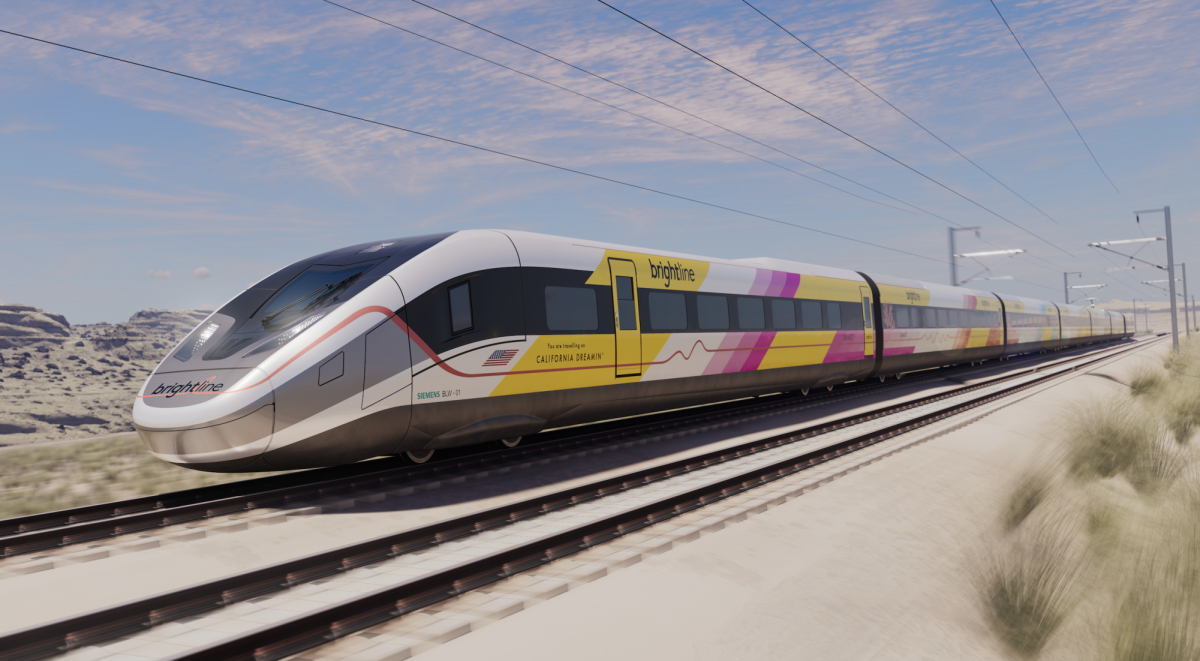
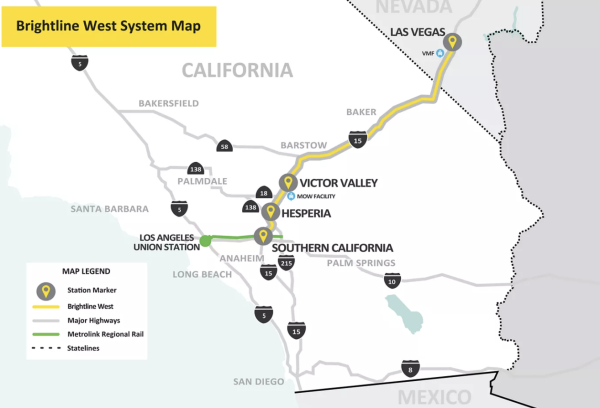
According to the eco-friendly company, Brightline West, Las Vegas may soon become even more connected to Southern California thanks to the development of Brightline West, a high-speed rail system that aims to link Las Vegas with the greater Los Angeles area. The project has gained significant attention in recent years, especially as construction efforts begin moving forward in 2026. If completed as planned, Brightline West could transform how people travel between Nevada and California.
Brian Simmons, freshman, states, “My family and I go on trips out to Los Angeles every break, this will save so much time and gas money.”
The train is expected to run at speeds of up to 200 miles per hour, drastically reducing travel time. Instead of spending four to five hours driving through traffic on Interstate 15, passengers could reach Las Vegas from Southern California in just over two hours. For a city that depends heavily on tourism, this kind of accessibility could have a major economic impact.
Supporters of the project argue that Brightline West will bring several benefits. First, it could reduce traffic congestion on one of the busiest highways connecting Las Vegas to California. Anyone who has traveled to or from Las Vegas on a holiday weekend knows how crowded the I-15 can become. A high-speed rail option could take thousands of cars off the road, making travel safer and less stressful.
In addition to easing traffic, the project is expected to create jobs during both construction and operation. This includes positions in engineering, construction, customer service, and train operations. For students at Shadow Ridge High School, this could mean new career opportunities in the future, especially for those interested in technology or transportation industries.
Alexis Stephenson, sophomore, says, “Wanting to go into engineering after high school, having a high speed train in my city is a great motivation.”
However, not everyone is fully convinced. Critics have raised concerns about the cost of the project and whether enough people will use the train to justify the investment. Others question how ticket prices will compare to driving or flying. If tickets are too expensive, many travelers may choose to stick with their current methods of transportation.
Ethan Brooks, senior, emphasizes, “My folks and I take summer trips to visit family every summer. Gas is definitely leaves a big hole in the pocket.”
Environmental impact is another important factor. While trains are generally considered more eco-friendly than cars or airplanes, the construction process itself can have environmental consequences. Still, many experts believe that in the long term, high-speed rail will reduce carbon emissions by encouraging more sustainable travel.
Overall, Brightline West represents a major step forward for transportation in the Southwest. If successful, it could reshape travel habits, boost the local economy, and provide a faster, more convenient way to reach Las Vegas. For students and residents alike, it’s a project worth watching as it continues to develop.