

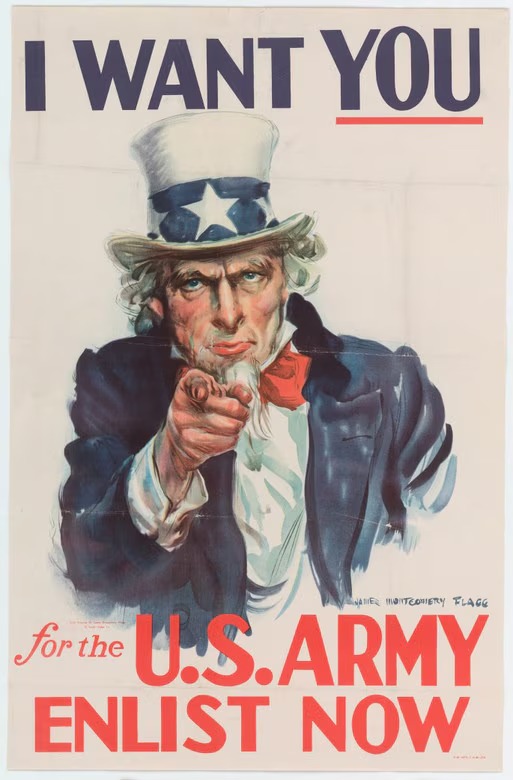
As the nation grapples with global challenges and military readiness, a renewed focus on the Selective Service System has raised significant discussions among students and faculty at Shadow Ridge. With the shift toward mandatory draft registration for nearly all male U.S. citizens and male immigrants aged 18 to 25, the importance of understanding this policy and its implications cannot be overstated. For many, the notion of a military draft brings a cascade of emotions.
“I’m very surprised about these new laws and am partial about them,” Kason Leavitt, a sophomore at Shadow Ridge, expressed. “I do not know enough about them to judge them.”
His sentiment embodies the uncertainty felt by numerous young people who stand on the brink of adulthood. With the draft not having been active since 1973, many are left questioning the relevance and consequences of mandatory registration in today’s context.
What many may not realize is that while registration is indeed mandatory, an active draft has not been in place for over four decades. The U.S. military operates on an all-volunteer force, which has been a defining feature of its recruitment strategy. However, should the need arise, a new act of Congress and authorization from the President would be necessary to reinitiate an active draft. Understanding these processes is crucial, especially as the U.S anticipates automatic enrollment for eligible individuals starting around December 2026.
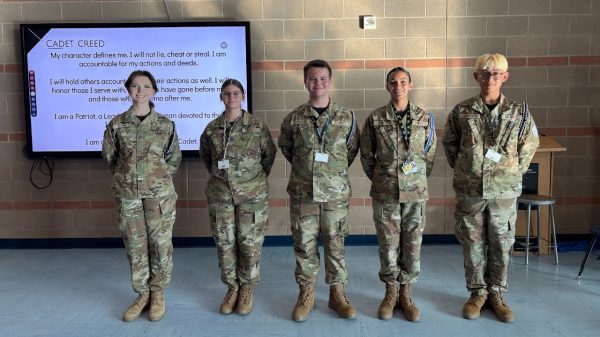
For students like Ruby Muschong, a sophomore in the JROTC program, the draft feels like a distant concern.
“Since I am already planning on joining the military I feel like a draft doesn’t concern me,” she stated.
Her perspective reflects a growing trend among young individuals who view military service as a path to personal development and national contribution. For many, joining the military is a choice driven by a sense of duty and the desire for a structured future.
Support for military readiness is echoed by Hali’a Zimmermann, another sophomore JROTC member, who confidently states, “I am in full support of the land of the free because of the brave.”
Her sentiment underscores the respect and appreciation many students have for those who serve and protect the nation. This support highlights a critical aspect of the conversation surrounding military service and American identity, suggesting that many young Americans are increasingly aware of the sacrifices made by service members.
Yet, the stakes of failing to register with the Selective Service System are significant. Not only does noncompliance potentially result in fines up to $250,000, but it can also lead to imprisonment for up to five years. Furthermore, those who do not register risk ineligibility for federal student aid, federal jobs, and citizenship for immigrants. These penalties serve as a stark reminder of the responsibilities that come with citizenship, igniting discussions about civic duty within classrooms.
Social studies teacher Mr. Pack stated his knowledge, “Eighteen year olds have been required to register for selective service going all the way back to WWI. Although there have been some interruptions, I know it has been that way for decades. I remember a speaker coming to my school senior year that warned us of the consequences if we did not register within 30 days of our 18th birthday. What we have to ask ourselves is this: if registering is already a requirement, and the government already has the data and information that they need then why wouldn’t the government complete the process for you? Even though I am a proud veteran, I am no fan of a military draft, as my favorite uncle told me many stories of what happened in Vietnam. However, if this change is just streamlining the process which will result in a decrease in penalties for eighteen year old males then I would view it as a positive.”
As the landscape of military service evolves, the student body at Shadow Ridge stands at a pivotal moment in history. The dialogue around mandatory draft registration reflects broader themes of responsibility and commitment to one’s country, fostering a new generation of informed citizens. As people navigate these changes, it is essential for everyone, students and faculty alike, to engage in meaningful conversations about the role of military service in society today and tomorrow.
While the future is uncertain, the importance of understanding and participating in national defense systems remains a vital part of civic duties as emerging adults. The conversations occurring today may very well shape the fabric of tomorrow’s military and societal landscape.