

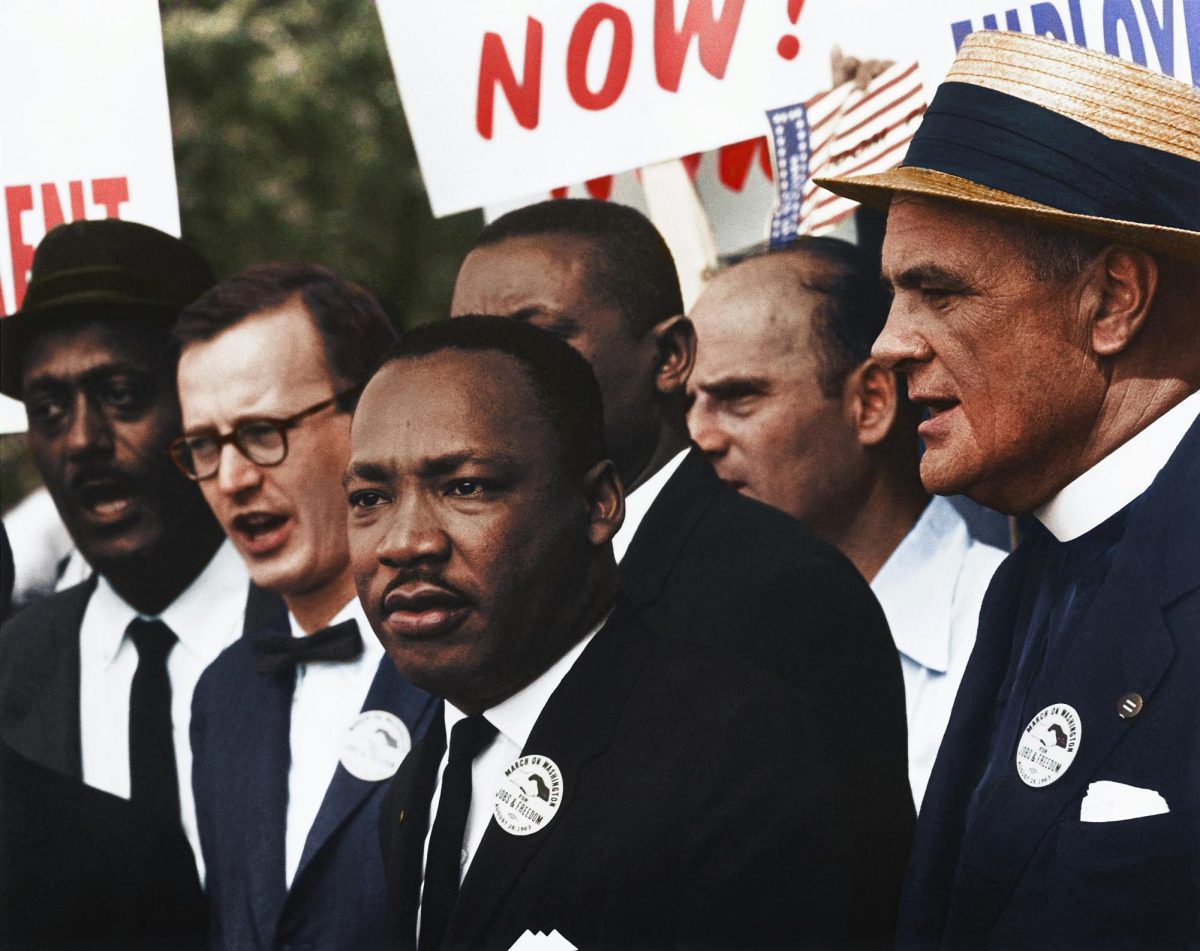
Officially created in 1976, Black History Month has been celebrated every February to commemorate the achievements and history of African Americans in the U.S. Comparable to everything in life, there’s a beginning to every story. While many see it as something that has always been there, like any important movement, it had a beginning.
Junior Janelle Fiamordzi said, “Black History Month to me means celebrating the sacrifices of our ancestors that have brought us to where we are today.”
Black History Month traces back even further than 1976. According to National Geographic, it began as “Negro History Week” in 1915. The week was created by the Association for the Study of Negro Life and History to highlight Black American figures and their contributions to the country, contributions that were often ignored in classrooms. Without this organization pushing for recognition, Black History Month might not have existed. Decades later, Negro History Week expanded into a month-long celebration thanks to President Gerald Ford, who officially recognized Black History Month in 1976. Since then, February has become a time to appreciate, celebrate, and educate. Schools, museums, and communities across the country take time to highlight leaders, artists, and activists whose impact has shaped American history in powerful ways.
Many people wonder why February was chosen, especially since it’s the shortest month of the year. The reason connects back to the second week of February, which includes the birthdays of abolitionist Frederick Douglass and former U.S. President Abraham Lincoln. Both played major roles in the fight against slavery and in advancing freedom and equality, making the timing meaningful rather than random.

However, Black History Month is about much more than just historical figures students memorize for a test. It’s about understanding how the past connects to the present. It stands as a reminder that progress didn’t come out of the blue, it was fought for.
“Learning black history changes the way I think about history as a whole. It makes me realize just how impactful black people are to America, and the world as a whole,” junior Xavier Grafell expressed. “In traditional history classes, all we learn about is how we were slaves, but there is so much more to our culture than that.”
As students, it’s easy to think of February as just another themed month at school. But Black History Month is a reminder that history is still alive. The movements, voices, and stories from the past continue to influence the world today. Taking time to truly learn and reflect helps people grow into more informed and aware individuals. That’s what makes Black History Month not just important, but necessary.
Grafell stated, “From all of the innovations and landmark achievements we have made to the impact we have on pop culture and music, we are a major part of society.”




Shipp • Mar 4, 2026 at 6:37 am
Great article Savannah!