

At Shadow Ridge High School, Mrs. Spencer’s biology classroom provides students with a distinctive and immersive learning environment through the inclusion of several live organisms. Her classroom houses a few tree frogs, a python, and a collection of developing tadpoles. These animals serve as living models that enhance the curriculum and allow students to observe biological concepts in real time.
Mrs. Spencer clarifies “I have two ball pythons, four tree frogs, and three tadpoles.”
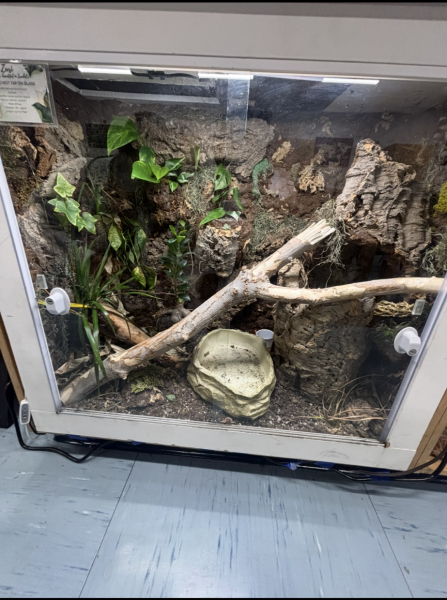
The tree frog offers students the opportunity to study amphibian anatomy, behavior, and environmental adaptations. Its climbing abilities, coloration and reliance on moisture provide concrete examples of how amphibians survive within their ecosystems. Through clearer understanding of ecological relationships and the importance of habitat preservation. Additionally, the tree frog helps students examine how environmental changes can affect sensitive species. Its daily behavior patterns allow students to practice making scientific observations and recording data accurately.
The python in Mrs. Spencer’s room plays a key role in dispelling common misconceptions about snakes. Its calm temperament allows students to safely examine reptile characteristics such as movement, thermoregulation, and sensory perception. Under close supervision, students gain insight into reptile biology while learning appropriate respect for wildlife and proper animal care procedures. The python also provides a valuable example of how reptiles interact with their surroundings and respond to environmental stimuli. Observing the python’s behavior helps students understand the importance of maintaining proper habitats for captive animals.
“I actually really do in general like reptiles and amphibians,” said Mrs. Spencer.
The tank of tadpoles offers a dynamic illustration of the process of metamorphosis. As students observe the transformation from larval stage to adult frog, they gain firsthand experience with developmental biology. This gradual progression reinforces classroom lessons on life cycles, growth, and environmental dependence. Students can also compare individual tadpoles’ growth rates, providing a basis for discussions on genetics and environmental factors. The clear visibility of each developmental stage allows students to track changes over time and connect these observations to scientific terminology.
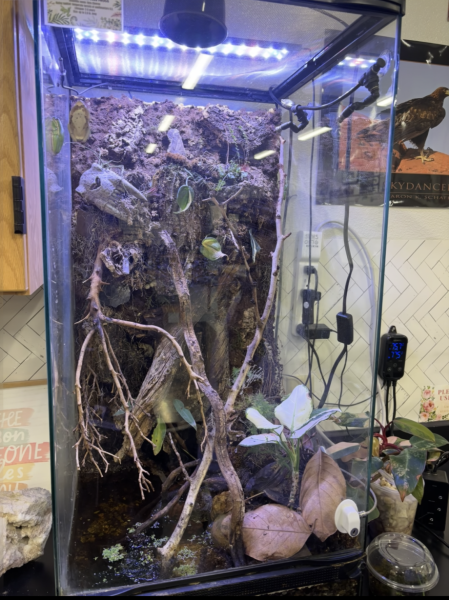
“Although they aren’t class pets its cool to have reptiles and amphibians surrounding you,” said junior Savannah Brown.
Spencer’s integration of live organisms into the classroom supports a deeper level of student engagement and comprehension. The presence of these animals encourages inquiry based learning, fosters responsibility, and promotes scientific curiosity. By observing living systems directly, students are better able to connect theoretical concepts to observable biological processes. Through the incorporation of these classroom animals, Mrs.Spencer provides Shadow Ridge High school students with an enriched educational experience that strengthens their understanding of biological sciences. Her hands-on approach demonstrates the value of experimental learning and contributes meaningfully to student academic development.