

Advanced Placement classes are college-level courses that target students who want to earn college credits while attending high school. Not only are they useful for college credit, but they’re also a good way to boost a student’s grade point average (GPA). For the entirety of the year, the class is preparing for the AP exam: a test at the end of the school year to assess a student’s ability to apply the information that was taught. Typically, a fee is required to take an AP course; however, Shadow Ridge possesses a grant that allows students to take an AP class without charge.
These rigorous courses are designed to be challenging while building upon previous skills, including reading, writing, critical thinking, problem-solving, and time management. Numerous students may be discouraged from adding an AP class to their schedule in fear of failing or not being able to meet the standard. Self-consciousness can prevent people from creating new experiences and opportunities; by refusing to allow internal forces to control one’s decisions, it will boost self-esteem and overall outlook on life. Although easier said than done, life does not come without difficulty, so it is imperative for an individual to stray from their comfort zone and face their anxiety head-on.
AP African American Studies teacher Mrs. Mason explained, “If you’ve never joined an AP class before, do a little bit of research to see what the class is about. Every student has access to the CED to see what the class is composed of. I would definitely advise asking other students, and also see what colleges take AP credits versus dual credit to see which one is the best route.”
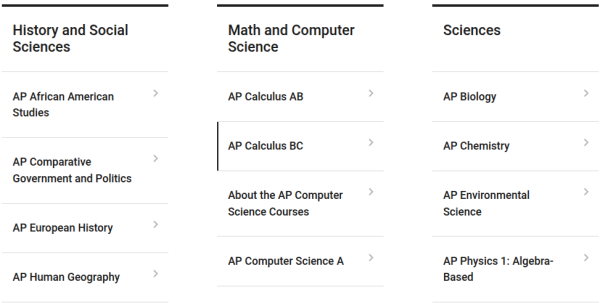
There are a multitude of options to choose from when selecting an AP class, and the number of choices can be overwhelming. One of the best things to do is research the easiest to mid-level classes in order to get a feel for what to expect going forward. When seeking college credit, it is important to be mindful that not all colleges accept AP credit; still, a student should take prerequisite courses according to their desired major, as this is vital to building essential background knowledge in a specific field.
Arguably, the most crucial skill for an AP course, or any high school class, is the ability to stay on top of work, or ahead if possible. Tied in with time management, balancing one or more college-level courses can come with challenges for someone with poor prioritization skills, likely attributable to the workload and other classes to be concerned about. A way to overcome this obstacle is by eliminating distractions and immediately completing the assignment in class; in the case that a teacher hands out homework, promptly finish the work at home. If a student is not up-to-date with their assignments, it is tremendously easy for work to accumulate and for the student to feel as if they’re drowning. This will ultimately result in stress and anxiety, which may also lead to a sharp decline in academic performance.
Junior Kennedi Allen stated, “Finding study groups helps me manage pressure and anxiety.”
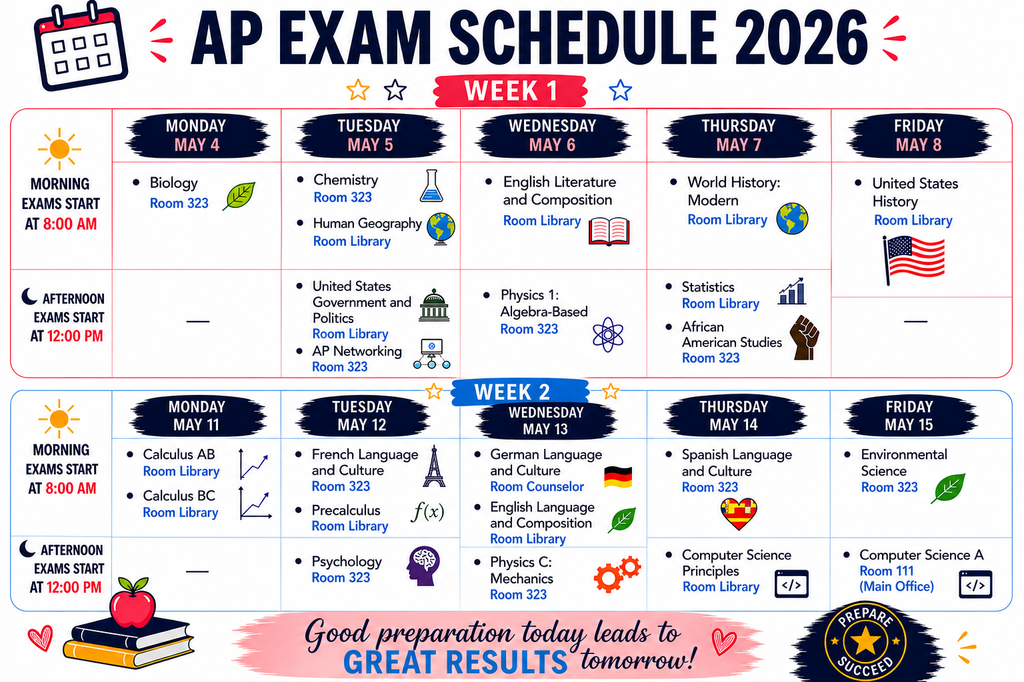
To circle back to the AP Exam students will take in May, the entire school year is spent preparing for the final test that determines whether a student has passed and if they will receive college credit. The exam scores range from 1 to 5: a score of 3 or higher is a passing grade and will indeed give a student credit; anything below a 3 will do the exact opposite. Unlike a general or honors class, it is necessary to remember vocabulary and concepts from previous units rather than dumping the information learned after a quiz or unit test. Finding a study method that best contributes to retaining knowledge will be essential as the end of the year approaches.
“Dedicate 1-2 hours of studying everyday for said AP class or classes,” Allen shared. “Take your time. It’s okay if you don’t get a 4-5 on the exam, it makes you gain more experience, and be prepared for future college classes.”