

At Shadow Ridge High School, students had the option to take either Dual Enrollment or AP classes. Both of these courses are college-level and they have their own advantages based on a student’s academic and future goals. These classes also differ in their curriculum and in how students are able to earn college credit. Both of these courses strengthen students’ transcripts and prepare them for the challenges of difficult work in college.
Dual Enrollment classes offer students the chance to experience true college-level expectations while still in high school. Aligned with Nevada State University, these courses prepare students for the rigor of higher education by requiring consistent effort, on-time submissions, and strong performance on assessments. Students do not receive full credit for late work, there is no “minimum F” policy, and retakes are not allowed. While these stricter regulations can initially intimidate many students, almost all are able to successfully receive college credit. To earn college credit, students must earn at least a 70%, and year after year, a very high percentage of students are able to achieve this.

“Every year students rise and exceed expectations,” Erik Pack, the Dual Enrollment U.S. History teacher states. “They prove they are more than capable of turning work in on time and preparing adequately for assessments once they are aware that not doing so will negatively affect their grade.”
Another benefit of Dual Enrollment is that students receive the full schedule for the year on the first day of school and weekly agendas before the weekend, so deadlines and assessments aren’t a surprise. With deadlines planned in advance, students are able to have time to manage jobs, sports, or any other responsibilities while completing their work around a schedule that works for them.
“I chose Dual Enrollment over AP because I like knowing when exactly when my assignments are due,” Eliana Cruz, a junior in Dual Enrollment, says. “With my busy cheer schedule, that flexibility really helps. Plus, I don’t have to take the AP exam to earn college credit.”

In addition, taking Dual Enrollment while still in high school is significantly cheaper than taking that same course in college, making it easier to begin earning college credit. Over the course of the year students can earn up to 6 college credits. For example, ENG101 in the first semester is worth 3 credits, and ENG102 in the second semester is also worth 3 credits. At UNLV, one credit would cost about $280 so earning 6 credits in college would cost $1680 which is a significant amount.
AP classes also give students the opportunity to experience college-level material, but with slightly more support from the high school side. Designed by the College Board, AP courses challenge students with rigorous work and assessments that are able to develop academic skills needed for college.
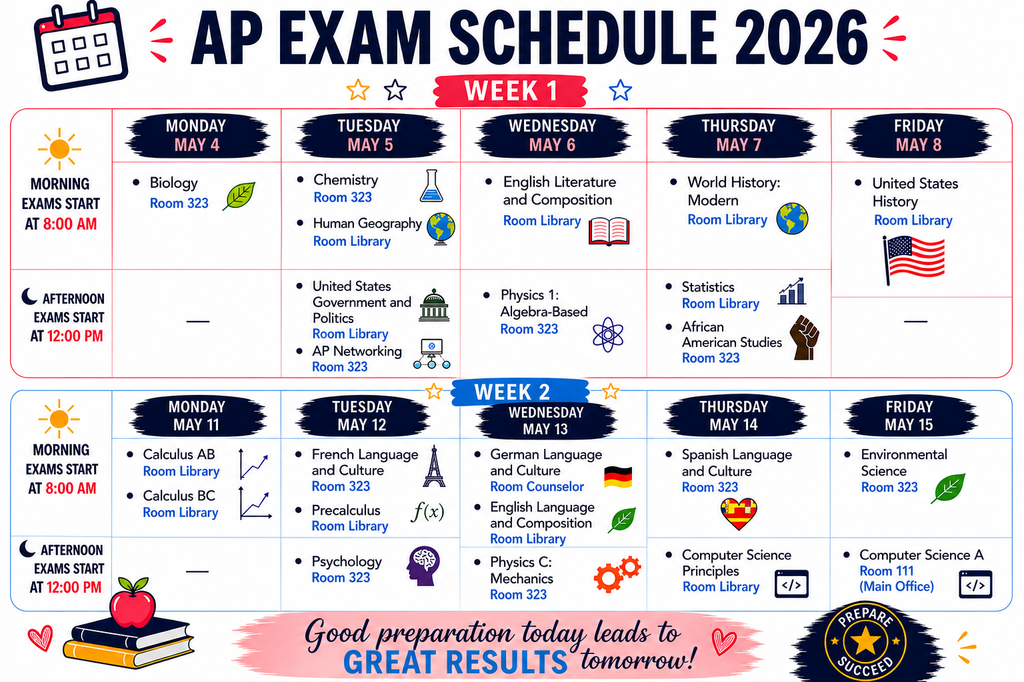
Students in an AP class are allowed to submit assignments at a later time within a five-day late work policy and they are also able to retake assessments. Assessments are also usually curved, and this curve can help boost students’ overall GPA. Each AP course is paired with the AP exam in May, students who get a score of 3 or higher on the AP exam can potentially earn college credit for one class which is typically 3 credits.
“I feel like with AP classes, it gives you an opportunity to dive into what the rigor and expectations are for college,” Noel Dover, the AP U.S. History teacher explains. “The readings that you do, the writings that you do, and especially the testing give you an opportunity to see what that looks like. And yet you still have a buffer from the high school side.”
Some students find that AP classes better match their long-term and academic plans.
“I chose AP over Dual Enrollment because when I received the presentation advertising this class, I felt that AP better aligned with what I wanted for my academic plan than Dual Enrollment did,” Olivia Gleave, a junior in AP, says.
Overall, both Dual Enrollment and AP provide rigorous opportunities for students to prepare for college. The choice ultimately depends on each student’s learning style, schedule, and future plans.